The US care labeling rule requires more than choosing familiar washing symbols. For covered lingerie, the responsible business needs a reasonable basis for the care instructions. Buyers should build that evidence around the complete garment. This guide explains how to request useful supplier information before approving label artwork.
Understand the US care labeling rule
The FTC care-label guide explains the need for supported instructions and permanent, readable labels on covered garments. Care information may address washing, drying, bleaching, ironing and relevant warnings. Check the exact requirements with your US compliance reviewer.
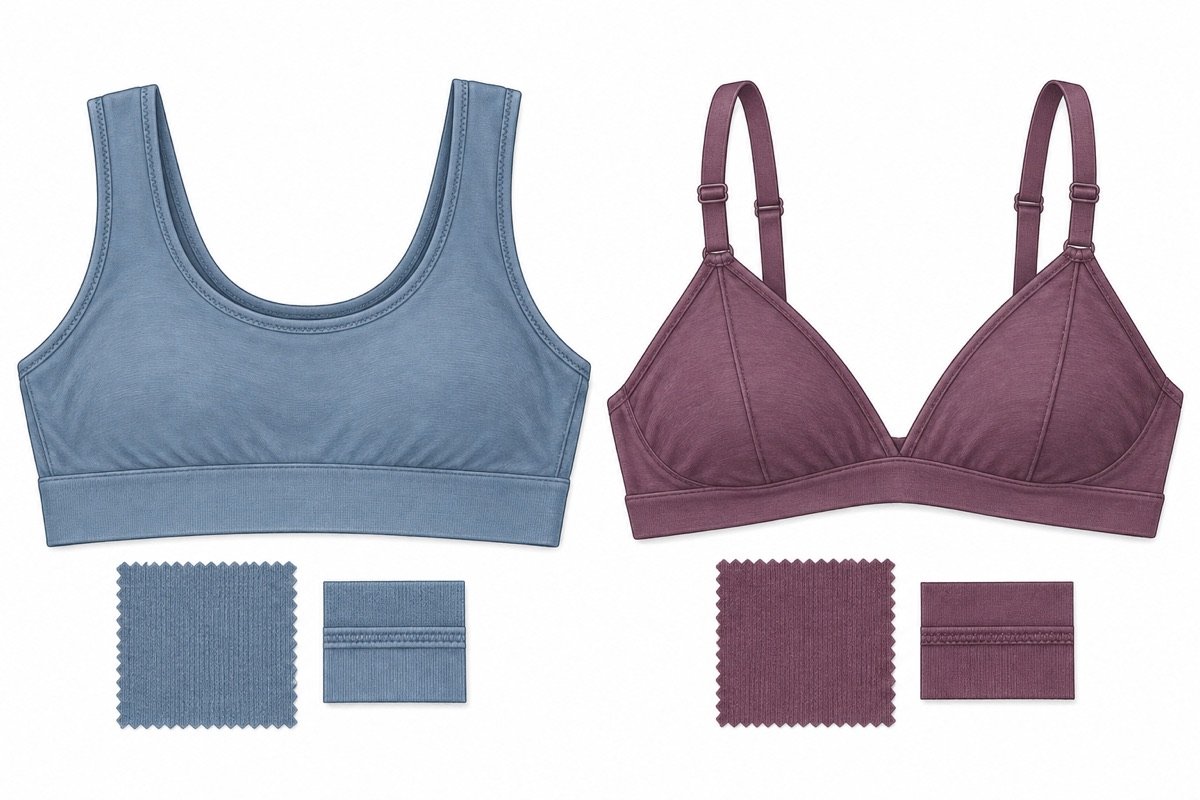
Importantly, a method suitable for the main fabric may damage another component. Therefore, review the finished bra, including elastic, foam, hardware and decorations. Copying a care label from a similar style is not a reliable approval process.
Ask for garment-level evidence
| Question | Record to request | Review point |
|---|---|---|
| Which sample? | Style, colour and construction version | Matches the intended order |
| Which care method? | Documented procedure and conditions | Supports proposed instructions |
| What changed? | Observations and results | Fit, appearance and components |
Agree the assessment approach before sampling. Next, record the starting measurements and appearance. Compare the garment after the proposed care process. Ask the reviewer to explain any limits instead of turning a single observation into a broad durability claim.
Approve wording and attachment together
Once the evidence is ready, prepare a controlled artwork file. Check the language, symbols and warnings against current requirements. Also inspect the label attachment and readability on the physical sample. A correct digital file is not proof of correct production.
Keep this review beside the bra sample approval record. Give the supplier one final version, and withdraw earlier drafts. Then verify that the production sample carries that version.
Review care instructions after substitutions
The US care labeling rule should remain part of change control. If fabric, elastic, bonding or decoration changes, reassess whether the existing instructions still have support. Do not assume that a visually similar replacement behaves the same during cleaning.
Share your care-evidence requirements with CNBRAS before sampling. Methods, document availability and feasibility need project confirmation. This is general buying guidance, not legal advice or a care recommendation for an untested product.