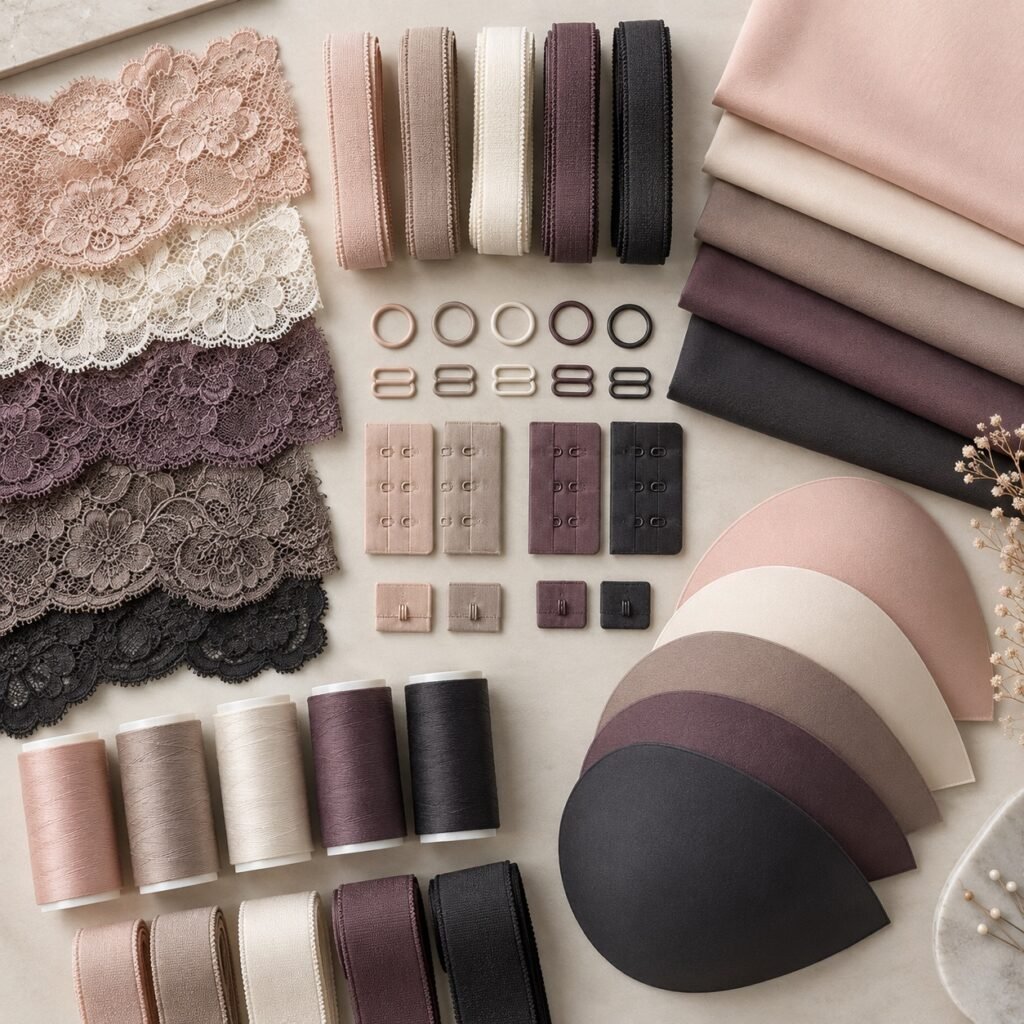
Direct answer: Bra color approval should coordinate lace, fabric, elastic, foam, thread and hardware as a complete garment system. Buyers need a physical color standard, agreed lighting, lab-dip sequence, component-level tolerance and assembled sample review because different fibers and finishes rarely appear identical under every light.
Define your bra color matching strategy
Decide which components must match closely and where a deliberate tonal relationship is acceptable. Lace, mesh, microfiber, elastic, foam and metal hardware reflect light differently. A warm tonal match may look more intentional than forcing unlike materials toward an unstable visual identity.
Use a controlled approval sequence
- Approve the master color direction on a stable physical reference.
- Review lab dips or component samples under agreed lighting.
- Group approved components on one trim card.
- Make an assembled bra in a representative size.
- Review the garment on body or form and after the planned care check.
- Approve bulk-lot combinations before cutting.
Record component-specific differences
| Component | Color watch point |
|---|---|
| Lace | Sheer ground, raised yarn and backing color |
| Elastic | Face, plush back, stretch whitening and edge yarn |
| Foam or cup | Coverage by outer fabric and exposed edges |
| Thread | Stitch density and contrast at seams |
| Hardware | Plating, paint, gloss and lot consistency |
Review lighting and care effects
Use the agreed light sources for retail and quality control, and record any metamerism concern. Stretch the elastic and lace to the intended garment extension because color can lighten under tension. Repeat the review after the planned wash or care procedure where relevant to the project.
Control bulk combinations
Identify dye lots on incoming materials and present proposed lot combinations before cutting coordinated sets. Keep a master trim card and an approved garment. If one component must be replaced, reassess the full color system rather than approving it in isolation.
Specify the evidence needed for approval
A color name alone is not a production standard. The development file should show which physical reference controls the collection, which components are close-match or tonal-match, which lighting conditions were used and who approved each stage. This gives design, sourcing and quality teams the same decision trail.
- Master color standard and reference date.
- Component list covering lace, fabric, elastic, foam, thread and hardware.
- Approved lab dips and trim card with supplier lot references.
- Lighting conditions and any accepted metamerism limits.
- Assembled sample, size reviewed and stretch condition.
- Care-test result and bulk-lot combination approval.
Frequently Asked Questions
Why do matching components look different under another light?
Different fibers, dyes, coatings and surface textures can create metamerism and gloss differences.
Should every component be the exact same shade?
Not always. Define close-match and intentional tonal relationships according to the design.
Why test elastic while stretched?
Stretch can expose base yarns and change apparent color in the worn garment.
Is a screen image enough for color approval?
No. Use physical standards and agreed lighting for production decisions.
What happens when one component changes?
Rebuild the trim-card comparison and review an assembled sample before approving the substitution.
Prepare a Coordinated Lingerie Color Pack
Share the color direction, style, component list and size range. Ask CNBRAS about trim-card and assembled-sample review options for your project.