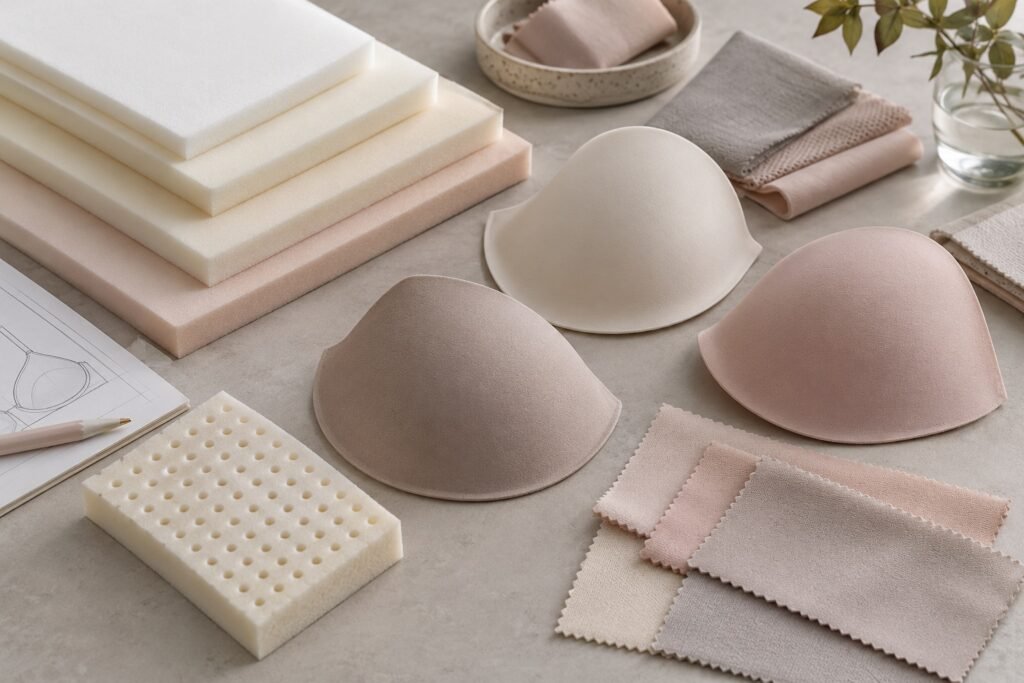
Direct answer: Bra cup foam should be selected as part of the complete cup construction, including outer fabric, lining, lamination and molding. Thickness and density matter, but recovery, breathability, edge transition, color and wearer comfort should be evaluated in an assembled size set.
Define the cup design and wearer need
Clarify whether the style needs light shaping, coverage, support, modesty, spacer-like airflow or a smooth molded silhouette. Consider the target size range and how cup depth, wire shape, cradle and strap support work together. Foam should support the design without replacing fit development.
Build a measurable bra cup foam brief
| Field | Approval question |
|---|---|
| Thickness | Is the range appropriate before and after lamination or molding? |
| Density and hand | Does the foam provide the intended softness and support? |
| Recovery | Does it return after compression, folding and wear simulation? |
| Cell or perforation structure | Does it support the intended airflow and surface appearance? |
| Color | Does it remain acceptable under sheer or light outer fabrics? |
Evaluate lamination and molding
Test the selected foam with the actual outer and inner fabrics, adhesive route, temperature, pressure and dwell time. Inspect strike-through, yellowing, wrinkles, bubbles, stiffness and bond consistency. Molding trials should use representative cup shapes and size ranges because heat and stretch can change thickness and hand.
Review edges and assembled comfort
Check foam transitions at neckline, underarm and wing junctions. Thick or abrupt edges can show through clothing or create pressure. Evaluate the finished bra on appropriate fit models, including movement, moisture and recovery, using respectful wearer-focused language and documented observations.
Control color and bulk consistency
Approve foam and laminated color under agreed lighting, especially beneath white, nude or pastel fabrics. Record lot identity, thickness range, roll or sheet dimensions and acceptable surface defects. If foam, adhesive, fabric or molding conditions change, repeat affected appearance and comfort checks.
Frequently Asked Questions
Is thicker foam more supportive?
Not automatically. Density, cup geometry, lamination and the full bra construction determine support and feel.
Why does foam thickness change after molding?
Heat, pressure and stretch redistribute the material, so molded areas may differ from flat-sheet measurements.
Can one foam specification cover every cup size?
Sometimes, but larger or deeper cups may require different construction or validation.
Why approve foam color under the outer fabric?
The foam can influence the final shade, especially under light or sheer materials.
What should a foam RFQ include?
Include style, size range, thickness, hand, color, lamination, molding route, test needs, dimensions and quantity.
Prepare a Bra Cup Foam Development Pack
Share the style, size range, cup construction, fabric pairing and hand-feel direction. Ask CNBRAS about sample options and confirm the scope of your fit review.