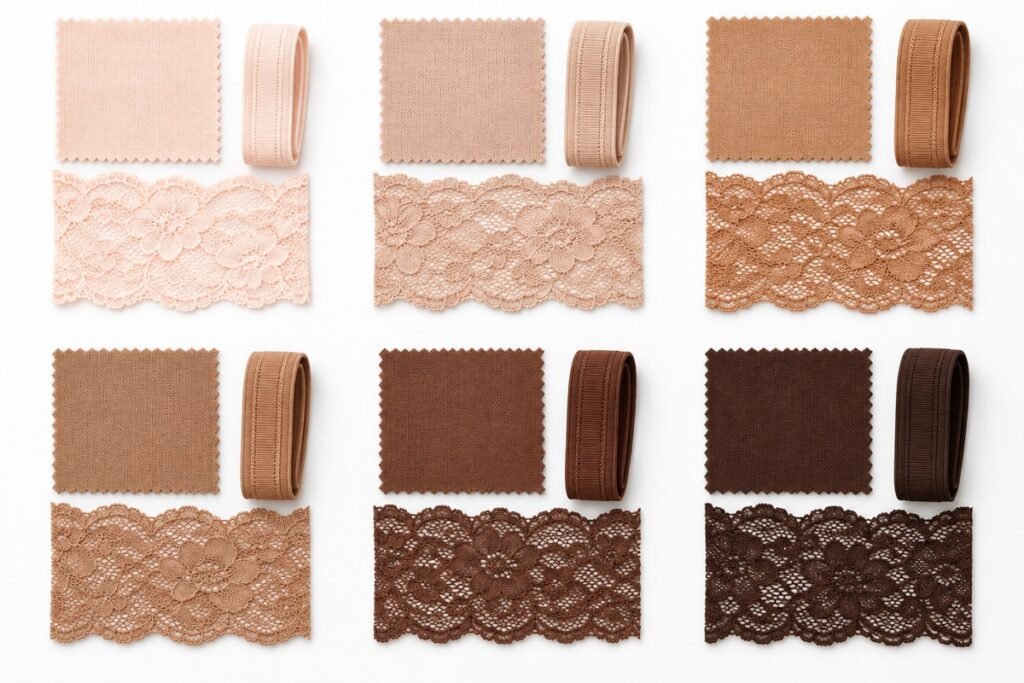
AI-generated color-coordination illustration; not a product photograph or a calibrated color standard.
Inclusive nude lingerie colors need more than a wider shade list. Build the range around customer needs, controlled references and realistic quantities. Then check how the fabric, lace and trims work together before approving samples.
Plan inclusive nude lingerie colors with customer evidence
First, review customer feedback, sales by shade and gaps in your existing range. Include the needs of the markets you actually serve. Do not treat one beige shade as a universal match. Also avoid claiming that a small color range represents every skin tone.
Create a physical reference for each shade
Give each shade a stable internal code and an approved physical reference. A name such as tan or cocoa helps merchandising, but it cannot control production color. Screen settings and lighting change what a photograph shows. Therefore, keep online images separate from the standard used for sample approval.
Compare fabric, lace and trims together
Ask for a component set covering the outer fabric, lining, lace, elastic and thread. Record each component reference and revision. Review the set under agreed lighting, then check the finished sample. Different textures can look different even within one intended shade. Define acceptable variation with the supplier instead of assuming a perfect match.
Balance shade choice with size coverage
Next, build a style-by-shade-by-size order matrix. Check whether adding colors reduces useful size coverage or creates small quantities that suppliers cannot confirm. Ask about minimum quantities for each material and color. Launch a smaller, considered range when necessary, then use actual demand to guide later additions.
Keep the sample decision traceable
Use the sample approval checklist to record the reference, lighting conditions, component versions and open issues. Confirm any required colorfastness checks for the product and intended use. A visual match alone does not prove wash or rub fastness.
Finally, send your lingerie color brief with the target market, shade references, size quantities and packing needs. Confirm available materials, sample costs, order quantities and timing for that scope. Keep shade names respectful and consistent across labels, photography and reorder records.
Inclusive nude lingerie colors depend on customer evidence and disciplined sample approval. Build a clear shade plan without treating an illustration or screen image as a production standard.